
You received that irresistible invitation from a friend to do your first hike or the hotel where you’re staying offered a guided walk through a local reserve. You got excited, but then doubts started to pop up: “Will I be able to do it? What do I need to bring? What clothes should I wear?”.
Hiking (short walks) is the gateway to a lifestyle connected with nature. The ideal is to always ask the activity guide or whoever invited you what items you should bring, what the difficulty level of the trail is, or how you should dress, so you can prepare better. But beyond asking, it’s important that you understand the reason for bringing a certain item or wearing specific clothing.
To help you with this task, we put together a list with 10 essential tips so that your first hike is memorable for the right reasons and not because of mishaps.
1. Research the hike before you leave home
Don’t underestimate a short hike. Research the terrain type (is it soft sand, does it go through a river, are there steep climbs?), the estimated duration and difficulty. Knowing what you’re getting into helps avoid unpleasant surprises and allows you to enjoy the scenery much more. Search the internet for reports, check the trail route and comments on websites like Wikiloc or eTrilhas, for example.
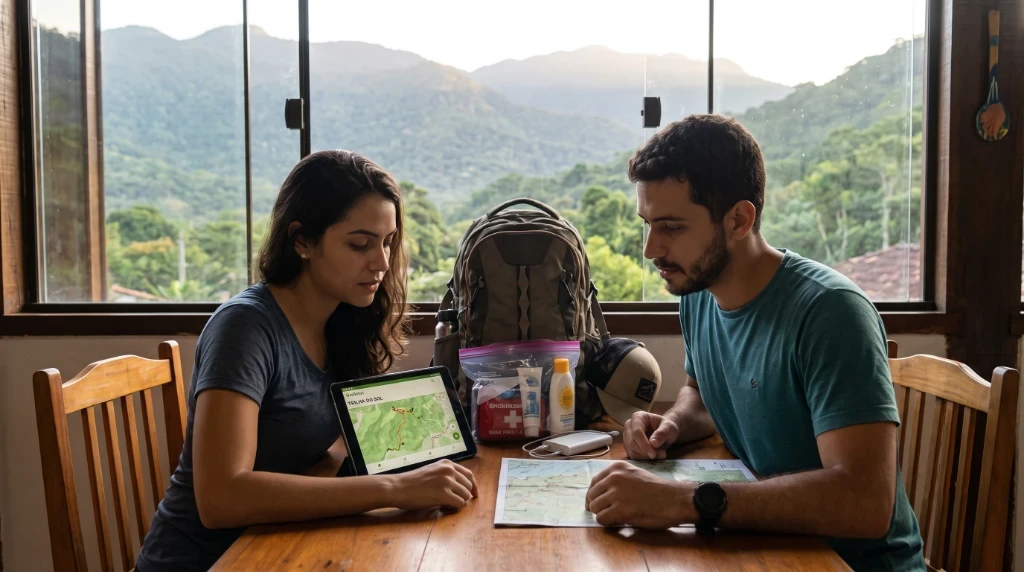
Plan ahead and gather more information about the trail: what is the duration, hiking difficulty, terrain type, etc. Illustrative image generated by artificial intelligence
2. Respect your body
Honestly assess your physical condition. If you are sedentary, starting with a very long trail or one with many climbs is not the best option. Choose a route compatible with your current fitness level so that the experience is enjoyable and not a sacrifice.
3. The right clothing makes a big difference
Forget jeans and cotton clothes. Wear synthetic fabric clothing (such as nylon or polyester) that dries quickly and promotes transpiration. Athletic clothes like those used for running or at the gym are great for trails! You will get dirty, you may get wet, your clothes may get damaged along the way, etc. Keep that in mind when choosing what to wear.
The weather can change quickly, so dress in layers, that is, wear a synthetic t-shirt and if necessary bring an extra piece of clothing with a warming function, don’t choose anything too heavy or bulky. Always bring a waterproof jacket or, at minimum, a windbreaker. Even on sunny days, the top of a mountain can be cold or unexpected rain may occur. Getting wet and exposed to wind is the fastest path to hypothermia. Ideally, you should be able to remove or add layers of clothing if the weather gets warmer or cooler. This jacket tip also applies to boat rides.
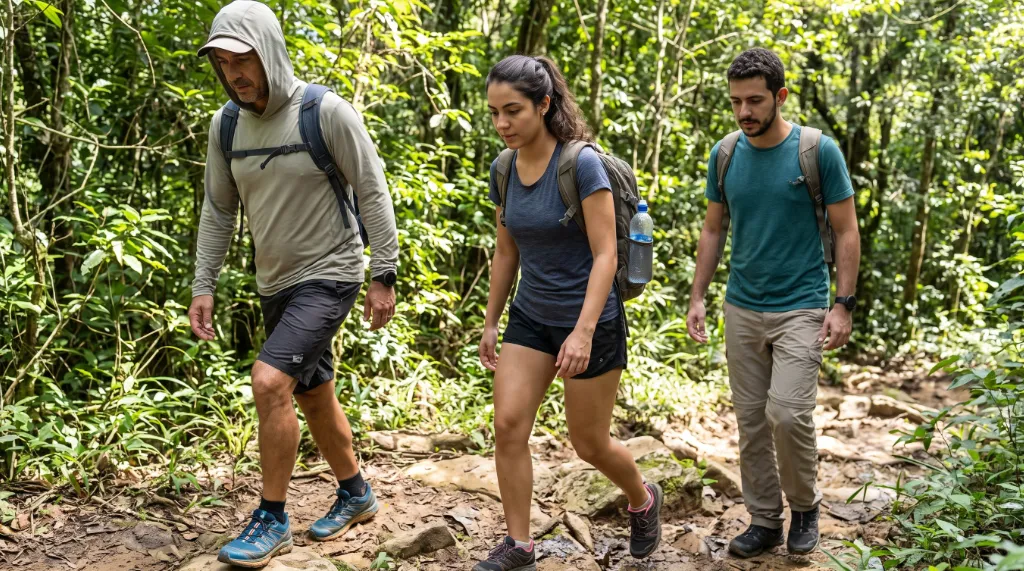
Illustrative image generated by artificial intelligence
Pants or shorts? This will depend on the weather and also on the vegetation of the trail. In places with denser vegetation, pants may be better, while on more open trails and on hot days, shorts will be more comfortable.
What about underwear? It should be comfortable, remember that you’ll be moving constantly and will be sweating.
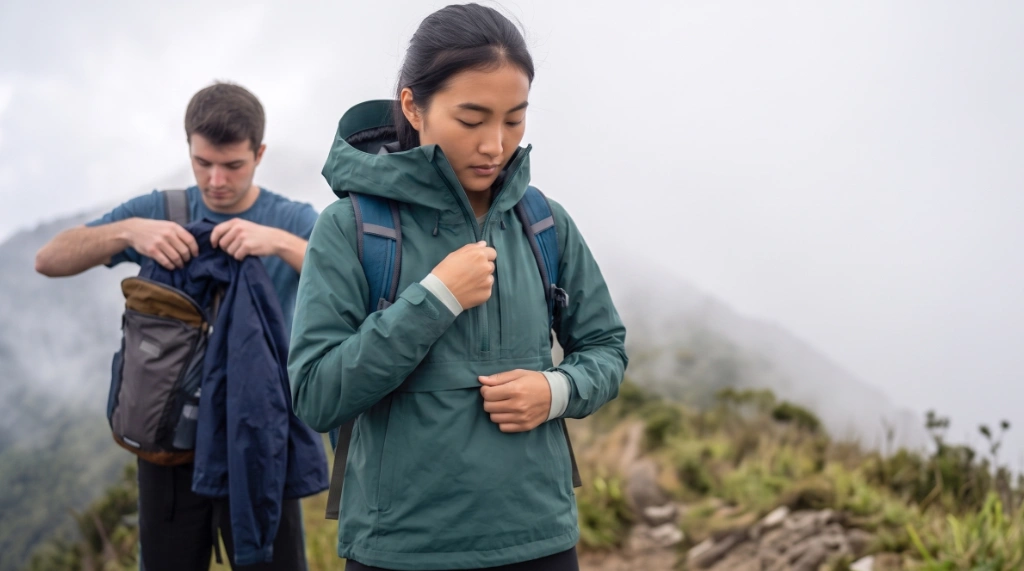
A waterproof jacket should always be in your backpack, even on short trails. Illustrative image generated by artificial intelligence
4. Essential items in your backpack
Besides the willingness, don’t forget to put some things in your backpack:
- Fully charged phone and in airplane mode to save battery. Bring your phone cable and a power bank to recharge the device.
- Sunscreen, lip balm, insect repellent, and sunglasses.
- A cap or hat to protect your face. Bandanas are also useful for protecting your head and neck.
- A mini first aid kit (with basic items to clean wounds and care for blisters, plus your daily medications). Arrange the items in a small pouch or a ziplock-type bag. We have videos about first aid kits here on our blog, it’s worth watching before putting together yours.
- Have a GPS app installed on your phone, Guru Maps is 100% free and works without cell signal, only with your phone’s GPS. It’s available for Android and iOS. Take some time to learn how to use the app and have it record your route from the beginning of the trail.
And speaking of backpacks… Don’t bring your items in plastic bags or any other type of bag that takes up your hands! Bring a school-style or everyday backpack. Ideally, it should have enough space to carry water, snacks, a jacket, and the other items mentioned in this text – nothing too large or too small. You should walk with your hands free so you can steady yourself if necessary.
If you want to learn more about hiking backpacks, including about larger models, it’s worth reading the article “How to Choose a Trekking Backpack“.
Normally when we go on our first hiking trail we don’t bring items like a headlamp or a small pocket knife, but if you have these items you can include them in your backpack.
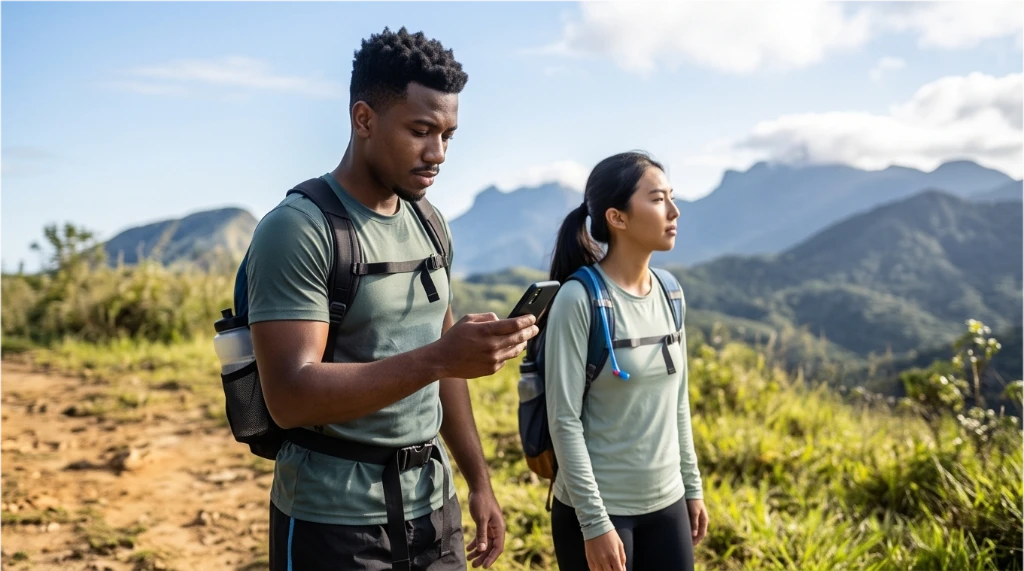
Have a GPS app with offline maps on your phone and if possible the track log of the trail. Illustrative image generated by artificial intelligence
5. Be careful when choosing your footwear
Avoid wearing sneakers with a very smooth sole (All Star or casual style) or footwear not designed for hiking. Believe it or not, we’ve seen people wearing sandals, flip-flops, and even heeled shoes. Ideally, you want footwear specific to hiking (like trail running shoes or boots), but if you don’t have such footwear, at least choose a sport sneaker with good traction so you don’t slip on muddy trails or wet rocks. Depending on the trail, you may cross streams, step in mud, or rub your shoe on rocks. Choose footwear that isn’t too expensive and is in good condition, so you won’t worry too much about getting it dirty and it won’t fall apart during the hike.
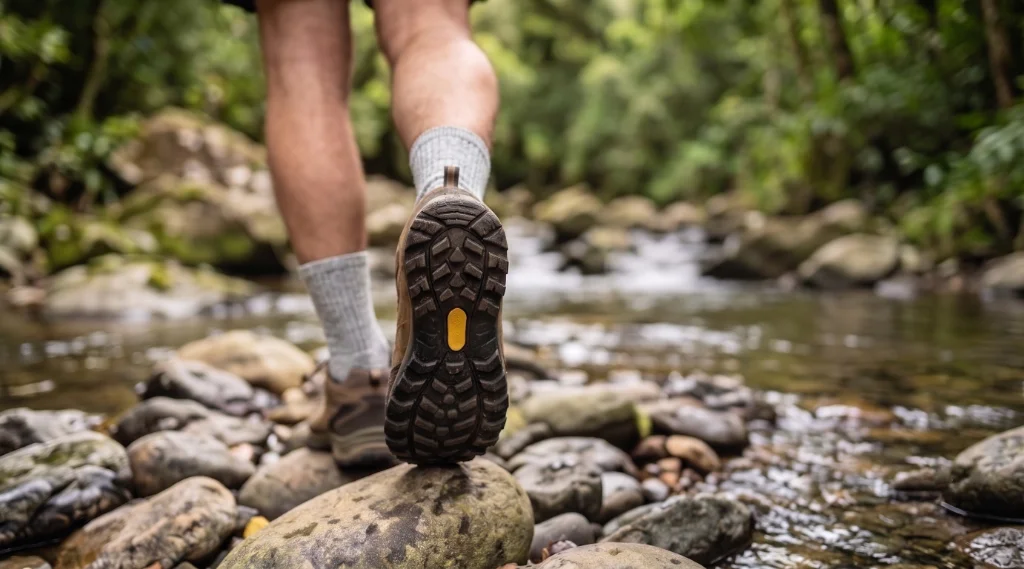
Proper footwear will make a big difference in your safety and comfort. Illustrative image generated by artificial intelligence
Another important tip: don’t choose a sneaker that’s too tight or your toenails will suffer during the descent – it’s not pleasant at all to have your big toe nail hitting the front of your shoe during a hike that lasts several hours.
Watch out for military boots, they may look great, but they’re not the best choice for someone not used to wearing this type of footwear – prefer something lighter and more comfortable.
And last but not least, if you bought a hiking boot, wear it a few times before you hit the trail, so you’ll be able to discover in advance if it hurts you at any point.
6. Don’t bring anything that isn’t necessary
Don’t bring unnecessary, valuable, or fragile items. Tablets, jewelry, expensive watches, portable speakers or electronics only take up space and risk breaking or getting lost. Leave luxury items at home!
Extra tip: this same rule applies to multi-day trails – both for valuable items and common objects. That is, if a piece of equipment or clothing isn’t really necessary – don’t bring it! It’s very common for us to put an extra shirt in the backpack, an extra jacket, more socks, etc. Evaluate if that’s really necessary, you don’t need 5 pairs of socks for a 5-day hike, the same applies to clothing, you don’t need a shirt for each day of hiking.
7. Food and water
The golden rule is: bring enough water (calculate about 17 oz per hour of hiking on hot days). Usually for one-day hikes we bring between 50 and 68 oz of water per person. Inform the people in your group about the amount of water each person should bring, it’s not uncommon to see people with only a 17 oz bottle for an entire day of hiking. Usually these people run out of water along the way and end up asking other hikers for water.
An interesting strategy is to bring a smaller bottle in a side pocket of your backpack and a larger bottle inside the backpack. The smaller bottle is more accessible for use during the hike and the larger bottle serves to refill the smaller one when necessary.
Ideally, you shouldn’t need to get water during the hike, especially if the sources aren’t safe. Even though river water may look clean it can be contaminated, if you want to learn how to decontaminate water during a hike read this article.
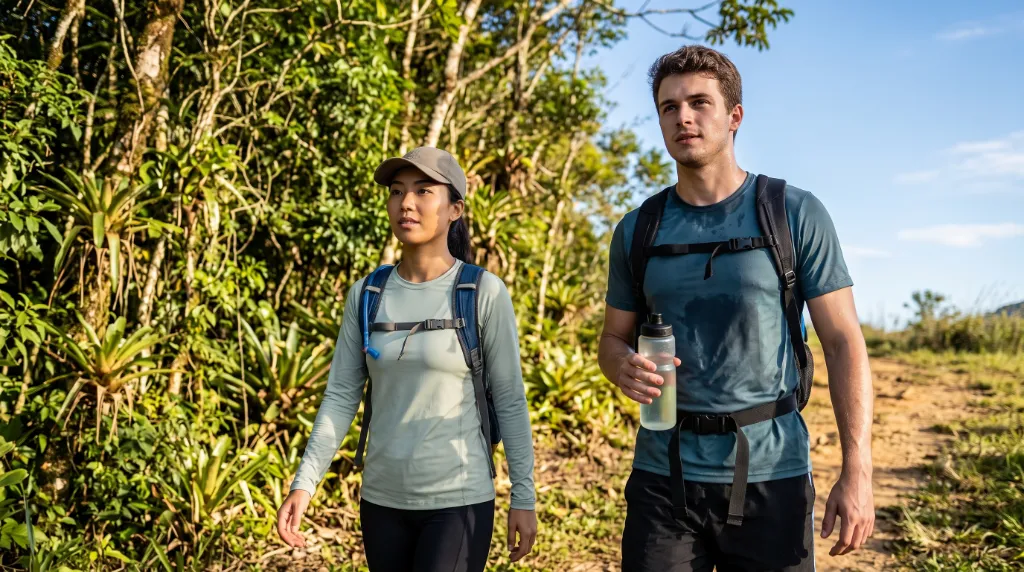
Bring enough water for the duration of the hike. Illustrative image generated by artificial intelligence
For eating, prefer practical and nutritious snacks such as nuts, peanuts, fruit paste, dried or fresh fruits and light sandwiches (with ingredients that don’t need refrigeration). Don’t bring only cereal or protein bars, when hunger hits you’ll wish for something more substantial than a cereal bar. Remember to balance sweet and salty foods, don’t bring only sweets.
Don’t wait to feel extreme thirst or hunger to hydrate or eat. The ideal is to drink small sips throughout the trail.
8. Pay attention to weather and never leave without telling someone
Check the forecast in the days leading up to your hike and keep an eye on weather changes during the hike. It’s not worth hiking on days with heavy rain, strong winds, or storms.
Before heading out on your hike, let a family member or friend know about your route and expected return time. Out in nature, cell phone signal won’t always be available, so notifying a friend or family member can make your rescue easier. Remember to let them know when you finish the hike.
9. Attention During the Trail
Some precautions during your hike are essential to reduce the possibility of accidents:
- Don’t hike wearing sunglasses, especially on more enclosed trails. They can make it difficult to identify obstacles or any animals on the trail.
- Don’t run or push other people; such attitudes increase the risk of accidents.
- Don’t take risks on cliffs, rivers, or waterfalls in search of a selfie for social media.
- Pay attention before leaning on branches or tree trunks; be careful not to touch caterpillars, spiders, or other animals that may be in these areas.
- Don’t put your hands or feet inside holes in the ground or in tree trunks.
- Watch out for branches at head height, especially when someone in front of you releases a branch and it snaps back toward you.
- Animals live in nature; when you spot an animal, keep your distance and don’t try to touch it.
- Running downhill may seem tempting (especially if you’re leaving the trail late), but it’s a recipe for disaster. Descend carefully and plan to return before dark.
10. Know the Leave No Trace Principles
Know and respect the leave no trace principles. Everything you bring in should come back out with you (including fruit peels and toilet paper). Stay on marked trails and do not remove plants or rocks from the area. Also, do not shout while hiking and do not listen to music without headphones. Remember that you went hiking in nature to live a different experience, so put music aside and listen to the sounds of the environment. Respect other people, residents, and the rules of the place.
Want to know even more about minimum impact in natural environments? Read this text about the 7 Principles of Leave No Trace.
Conclusion
Hiking in nature is much more than physical exercise, it is a “reset” for the mind. Being surrounded by greenery, hearing the sound of birds, reaching the top of a mountain and overcoming a personal challenge brings a sense of well-being that lasts for days. Following these simple steps of safety and preparation, you ensure that your first trail will be the beginning of many other adventures. The more you learn, the better your progress will be in outdoor sports.
Happy hiking!