
The Tour du Mont Blanc (TMB) is one of the most iconic long-distance trails in the world. It’s 164 km circling the Mont Blanc massif, passing through three countries (France, Italy, and Switzerland) with over 10,000 meters of elevation gain. It’s demanding, requires physical and logistical preparation, but it’s the type of adventure you’ll never forget.
This guide brings together some practical information on logistics, accommodation, food, when to go, and what to expect from the trail. If you’re planning to do the Tour du Mont Blanc, this post is a good starting point.
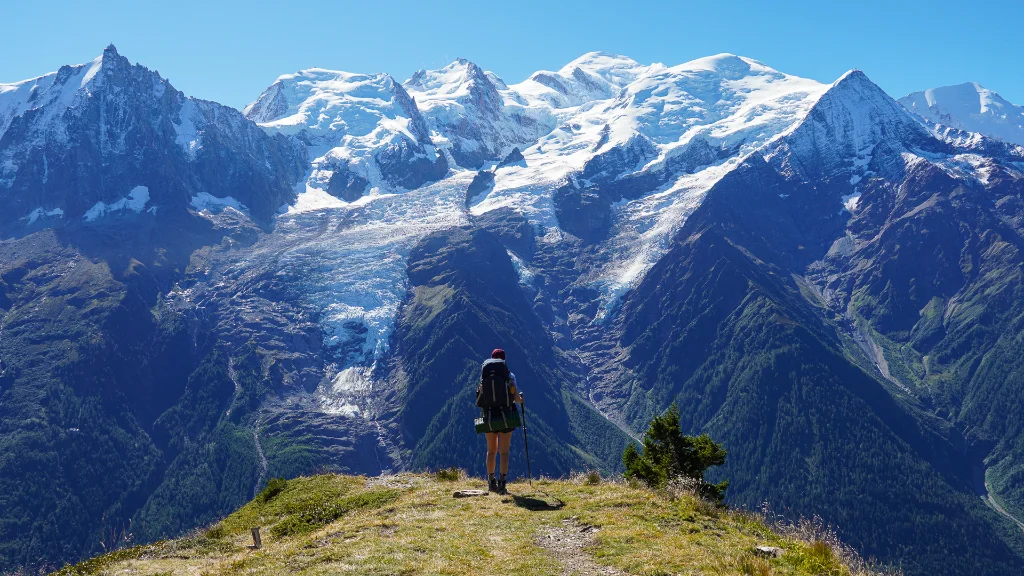
Viewpoint with views of Mont Blanc mountain
Tour du Mont Blanc Technical Specifications
- Location: Alps – France, Switzerland, and Italy
- Stages: 9-11 days
- Distance: 160 km
- Elevation gain: 10,000 m
- Season: June-September
- Route type: Circular loop
- Maximum altitude: 8,287 ft
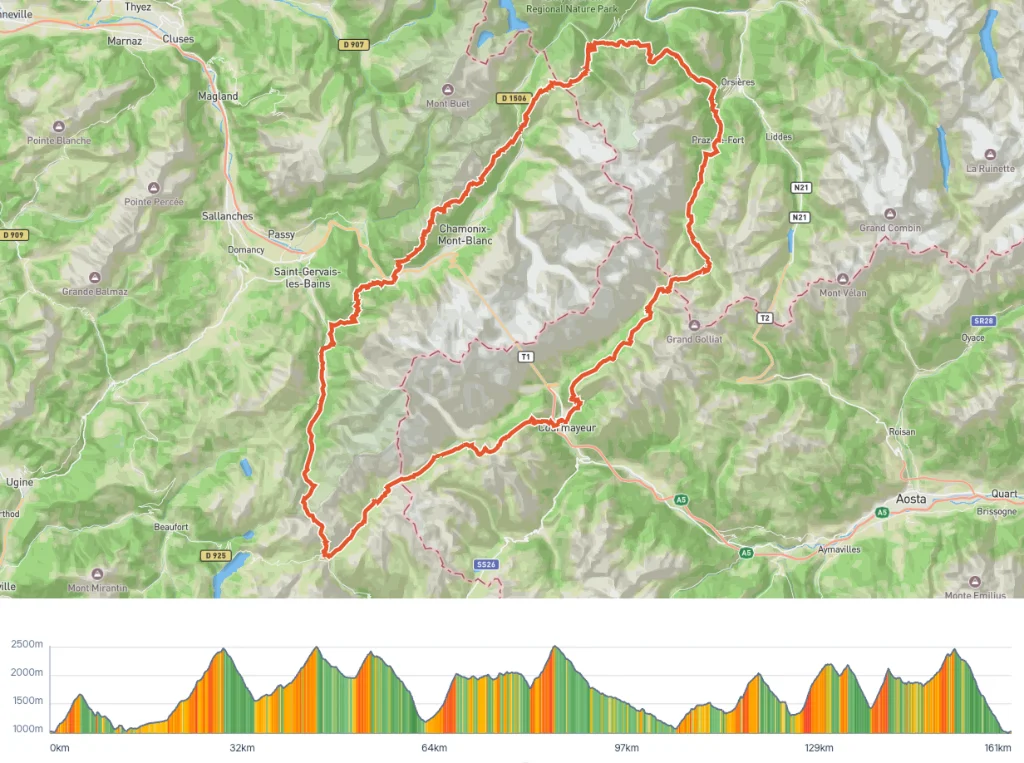
Overview map of the route extracted from the Hike Planner tool.
What is the Tour du Mont Blanc?
The Tour du Mont Blanc, also known as TMB, is a circular trail that contours the Mont Blanc massif, the highest mountain in the European Alps at 15,771 ft, passing through France, Italy, and Switzerland. The official route is approximately 100 miles, with a cumulative elevation gain of about 32,800 feet, both up and down. Most people complete the trail between 9 to 11 days, depending on pace and chosen variants.
It is not a technical trail, you do not need mountaineering equipment or climbing experience when completed during the typical season, between June and September. But it does require excellent physical conditioning. They are long days, passing through several sections above 6,500 ft.
What makes the TMB special is the experience of crossing three countries with alpine culture. On the French side, the views of the Mont Blanc massif are stunning and the terrain is more open. In Italy, the valleys are colorful and you pass by impressive glaciers. In Switzerland, the forests look like they’re from a fairy tale, and the small towns have a charm typical of the Alps.
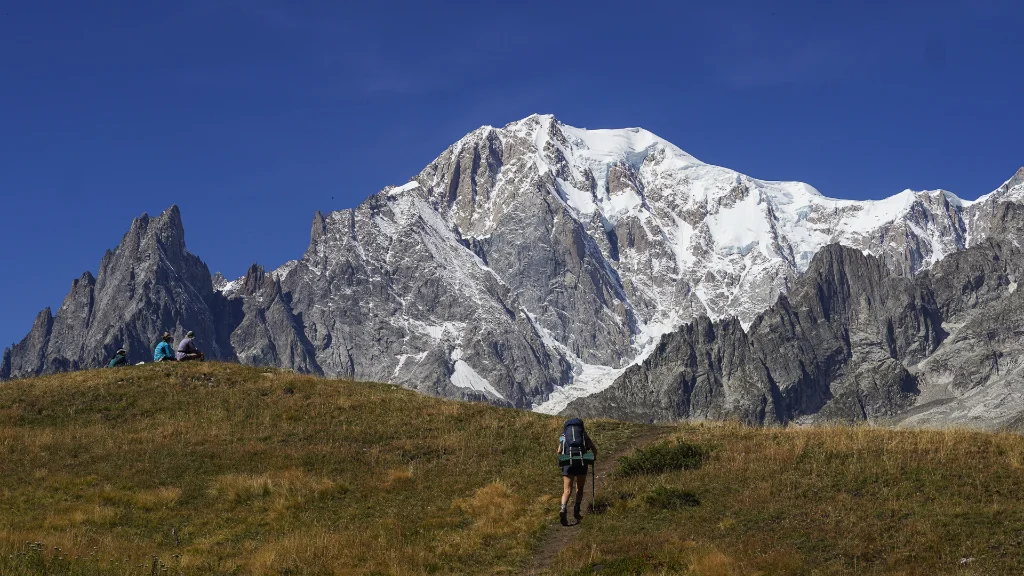
Views of Val Ferret, Italy
Accommodation: Refuges, Hotels, and Camping
Finding accommodation along the TMB is one of the biggest planning challenges. There are three main options: mountain refuges, hotels in villages, and camping.
Refuges
Refuges are the most popular and most immersive option. They are located high in the mountains, often in places with incredible views, and generally offer half board: dinner, overnight stay, and breakfast included. It is the best way to truly experience the alpine atmosphere.
The problem is availability. In recent years, refuges have become increasingly difficult to book, especially for July and August. Reservations generally open shortly after the season ends, around October, and in some cases they are available and sold out within the first few months.
Most refuges are part of a single reservation system on the website montourdumontblanc.com. Some, however, have their own reservation system, and some also only accept reservations by phone or email. But if you find yourself in a situation where a refuge crucial to your itinerary is full, there are some other unlisted options on the official reservation website that can be a lifesaver.
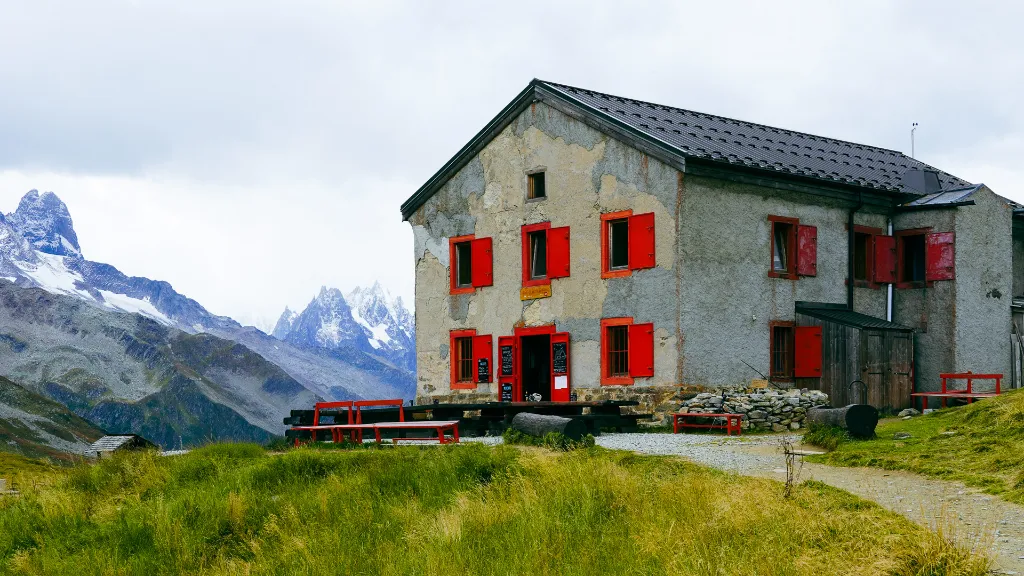
Refuge du Col de Balme, Tour du Mont Blanc
Hotels in Villages
Chamonix, Les Houches, Courmayeur, Champex-Lac, and La Fouly have more hotel and hostel options. Courmayeur is usually a common stop among hikers, as it is practically at the midway point, and offers good accommodation options and also restaurants. Some even take a full rest day in the city, great for recharging your energy and recovering for the final stages.
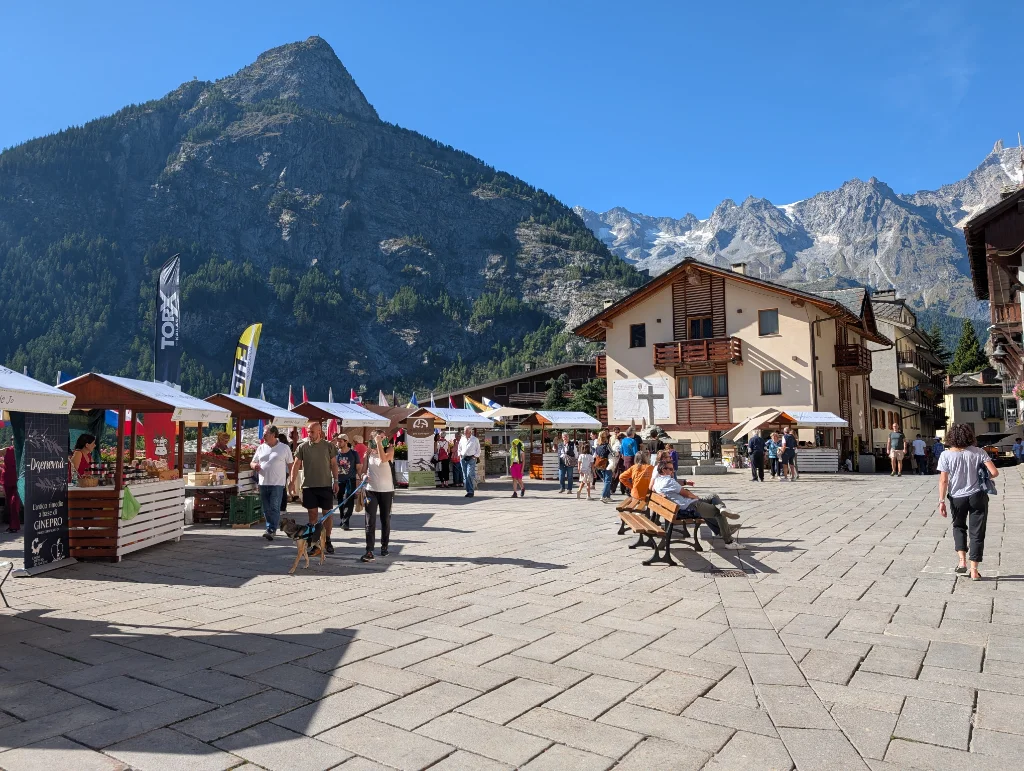
Courmayeur, Italian town in the Alps
Camping
Doing the TMB with a tent is completely possible. There are several camping areas along the route, and it is possible to do all stages sleeping in campsites. If you already have all the necessary equipment and are willing to carry it in your backpack, this is also the easiest option to complete the crossing, since refuges are highly competitive, while most campsites do not require advance reservations.
Wild camping is more restricted. On the French side, there are some areas where it is tolerated, and during peak season it is even regulated and prior authorization is required. In the Italian section, it is allowed only above 8,200 ft, which in practice only happens right at the border with Switzerland. On the Swiss section, there are no permitted areas close to the official route.
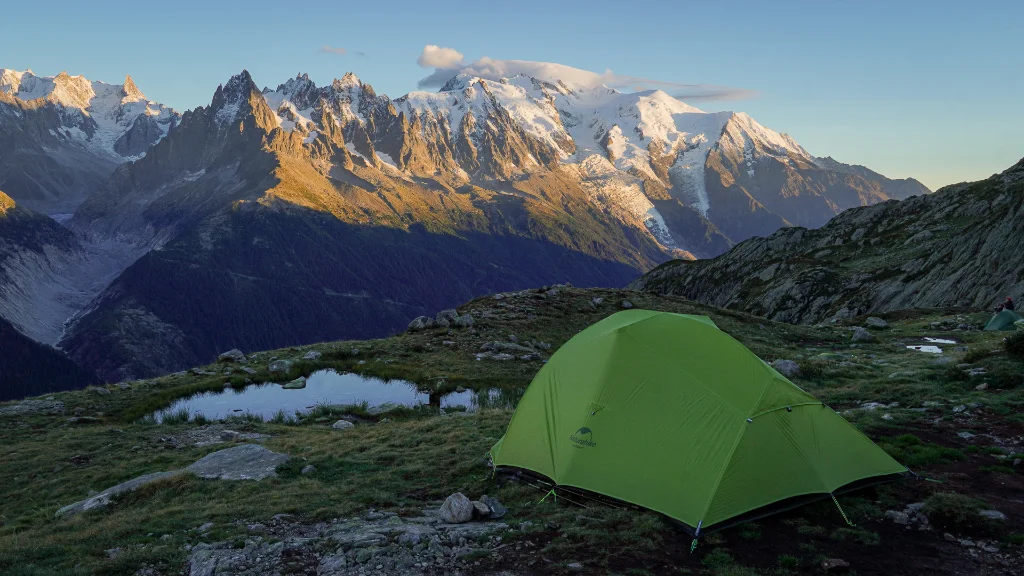
Bivouac area, Lac des Cheserys
How many days are needed to do the Tour du Mont Blanc?
The most common itinerary is 9 to 11 days, with daily stages between 9 and 15 miles. It is also more common to do it in a counterclockwise direction. The official starting point is Les Houches, a town near Chamonix, in France. Since it is a circular route, technically you can start at any point, but Les Houches has good infrastructure, with some more affordable accommodation options than Chamonix, and is where the official Tour du Mont Blanc arch is located.
If you have less than 9 days, it’s possible to do the TMB by combining longer stages or using buses and taxis to skip some sections, since during the trail you will always descend into valleys and pass through some small towns. With 11 or more days, you can explore variants, take shorter days, and make better use of the towns along the way.
What’s the best time to go?
The official summer season runs from June through mid-September. Outside this period, trail conditions are not very reliable, with possible sections of snow and ice, and most shelters will also be closed.
June is a more unstable month, and if you’re not prepared to cross sections with snow, it can be quite risky. Viability depends heavily on the season.
July and August are the busiest months. Shelters are packed, prices go up, and you’ll encounter many people on the trail. In early July there can still be snow in some sections, which can be an unpleasant surprise if you’re not prepared.
September is an interesting month, as the crowds drop significantly after August 15th. The weather is a bit more unstable, with more chances of rain and shorter days, but definitely more peaceful and easier to find availability at accommodations.
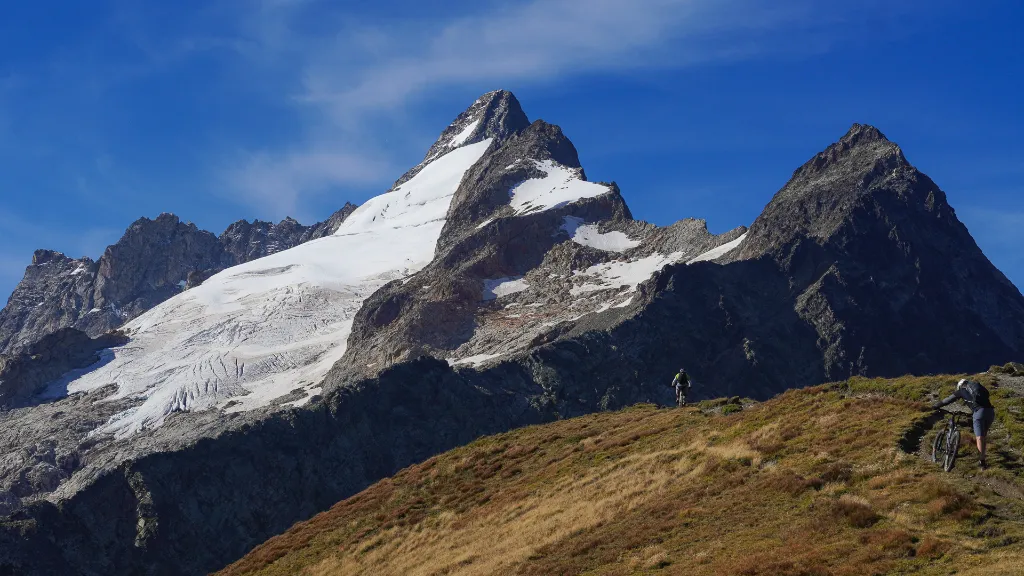
Views of a glacier at Col Ferret
Some practical tips for the Tour du Mont Blanc
Some things I learned from the two times I did the TMB that make a real difference in day-to-day hiking:
- Book shelters in advance. Especially in July and August. If you’re going during peak season, you need to start planning well in advance.
- Prepare your legs for the descents. The climbs are tiring, but it’s the long descents that wear out your knees. Trekking poles help a lot.
- Don’t underestimate the weight of your backpack. Every extra kilogram you carry will show up on day five. The ups and downs of the Alps will take their toll.
- Bring layers. Even in July, nights at high altitude are cold. It’s very important to be well equipped with thermal underwear and rain-resistant clothing.
- Bring cash. Most places already accept cards, but it’s always good to carry some cash especially in the high mountain sections. Also remember that in Switzerland the currency is the Swiss franc, not the euro.
Where to start planning?
If you’ve made it this far and are excited to do the Tour du Mont Blanc, the next step is to build your itinerary. The Hike Planner is a perfect tool to plan your adventure. The differentiator is the mapping of all camping options, mountain huts and allowed bivouac areas, all in one place, with all contact information and links to make reservations. For mountain huts that have an online reservation system, you can still view availability in real time directly on the map.
The TMB requires planning, but it doesn’t have to be complicated. With the right information and the right resources, you arrive in Chamonix ready to start, and you’ll understand why this trail is considered one of the best in the world.
For those who want to get a taste of what it’s like to do the Tour du Mont Blanc, I leave you a “Silent Hiking” style video with images of the trail, mountain huts and camping: