
The Quechua MH500 pants are one of the pieces of gear I use most in my day-to-day on trails and trips. After going through many brands and models over the years, they were the first trekking pants that truly gave me everything I needed: freedom of movement, breathability, practicality, and great value for the money. I haven’t switched models since.
I bought my first pair of Quechua MH500 mountain pants in 2019, in Chamonix, during an international Sea to Summit meetup. They were the black and gray version. In 2024, I bought a second pair, in blue, which became my official companion on the 35 days of the French Way of the Camino de Santiago de Compostela. Over hundreds of miles, they were tested in different temperatures, terrains, and levels of effort, and they passed every test.
In this review, I’ll go over the recommended uses for the Quechua MH500 pants, explain the main technical features, and discuss the differences between the older version (the one I use) and the current line. I’ll also share my real-world experience in the field to help anyone looking for trekking pants that are reliable for hiking, trekking, and pilgrimages like the Camino de Santiago.
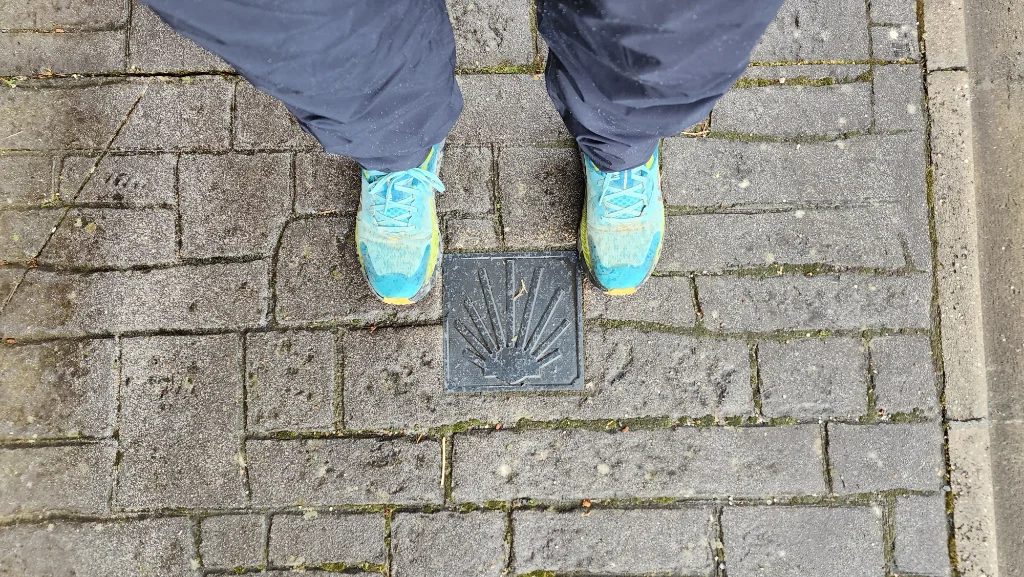
Recommended uses for the Quechua MH500 pants
The Quechua MH500 is a pair of pants designed for people who do hiking, trekking, and mountain walking with some regularity. Decathlon itself positions the model for an intermediate level of practice: users who already walk often, take on longer trails, rack up elevation gain, and want something a bit more technical than entry-level pants.
They come in men’s and women’s versions, both with the same intended uses and technical features, differing only in cut, fit, and belt (the men’s version has a belt, while the women’s has a beltless adjustment system).
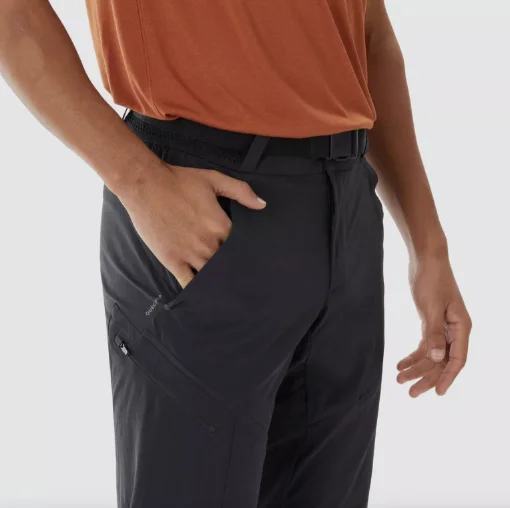 Quechua MH500 Men’s Pants
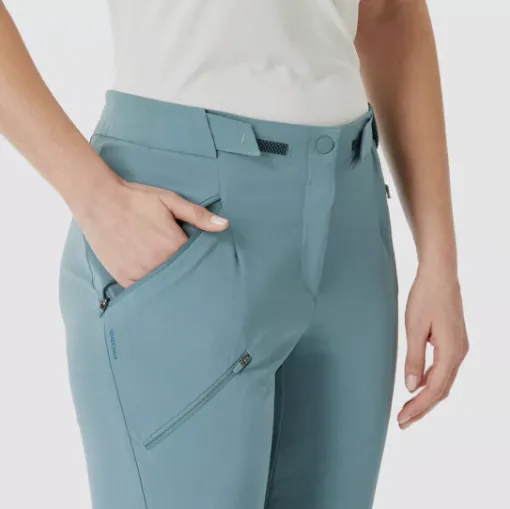 Quechua MH500 Women’s Pants
It’s a great fit for people who:
- do day hikes;
- do treks of two or more days, sleeping in a shelter or tent;
- do or plan to do pilgrimages, such as the Camino de Santiago;
- like to travel light, packing only a few pieces of clothing and washing them along the way.
These aren’t pants designed for cold, snow, or very strong wind; in those conditions, they work as a lightweight first layer, combined with a base layer and other pieces layered over them. The main focus of the MH500 is to be a pair of pants that’s breathable, lightweight, comfortable, and durable enough for most three-season trekking scenarios (spring, summer, and fall).
About Quechua and the MH Line
The Quechua is Decathlon’s brand focused specifically on camping, hiking, and outdoor walking in general. Within the chain’s portfolio, it stands out for its excellent value for money, offering well-designed, affordable gear for people who regularly do outdoor activities.
Within Decathlon’s ecosystem of brands, there is a natural overlap between Quechua and the Forclaz, which is the brand dedicated to trekking — especially long-duration trekking and more demanding traverses. While Quechua focuses on hiking and mountain activity at a lighter pace, Forclaz delivers products designed for long journeys, greater autonomy, and more remote environments. Even so, some categories, such as pants and lightweight jackets, end up complementing each other across the two brands.
The MH line appears across several products (pants, shirts, and jackets) and, generally speaking, is associated with the idea of “Mountain Hiking”. In the case of the Quechua MH500 pants, the number indicates an intermediate level of technicality: more features, better fabric, and superior finishing compared with the simpler models, but without reaching the level of top-of-the-line products from very specific niche brands.
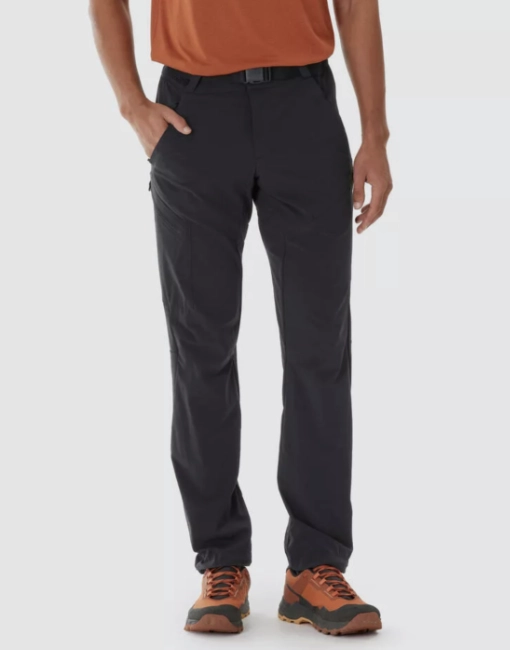 Quechua MH500 Pants Front
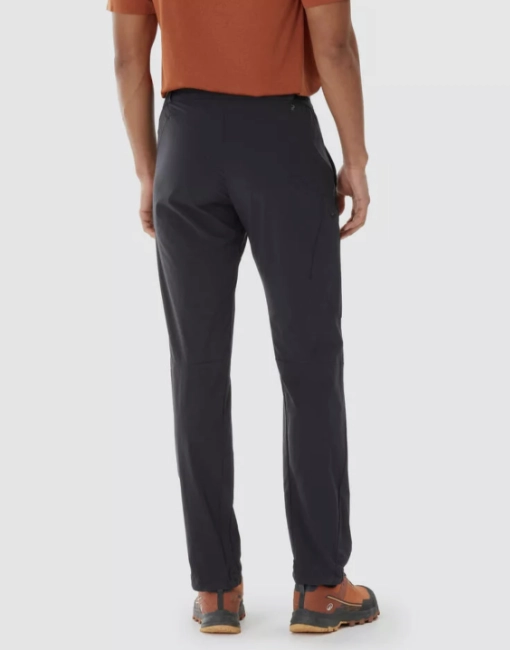 Quechua MH500 Pants Back
My experience using the Quechua MH500 pants
My relationship with the Quechua MH500 trekking pants began in 2019. Over the years, I had already tested different pants from international and Brazilian brands, with various fabrics, more technical cuts, zip-off versions (convertible pants), models with reinforcements, more “lifestyle” versions, and so on. When I tried on the MH500 in Chamonix, I liked the fit and especially the stretch right there in the fitting room, but I never imagined it would end up becoming practically my “official” pair of pants for trails and travel.
Since then, I’ve worn these pants on:
- short trails and urban walks while traveling;
- weekend traverses;
- longer mountain treks, such as the 15 days at FEAL Serra do Cipó, with Outward Bound Brasil;
- trips where I needed a versatile piece that worked both on the trail and for getting around, at simple restaurants, and on plane or bus rides.
The big test, however, came in 2024, when I took the blue MH500 as my main pants for the Camino de Santiago. It was 35 days in a row of walking, almost 500 miles (800 km), with swings in temperature, wind, sun, dust, long climbs, and steep descents. The pants handled it all: they didn’t tear, didn’t lose their shape, didn’t lose their stretch, and stayed comfortable to the very end.
There is also a zip-off version (convertible pants, as Decathlon describes them), which turns into shorts. I own that model, I like it, and I’ve used it a lot on other trips. On the Camino de Santiago, I took both pairs of pants: the regular version and the zip-off. The regular pair was the one I wore for walking practically every day, while the zip-off ended up taking on a more strategic role. I used it mainly for sleeping, for downtime at the hostels, and, on some days, as a backup when I needed to wash my main pair. It did a great job as a “spare pair,” but for walking long distances, I still prefer the regular version, which is quieter when you walk and a bit lighter.
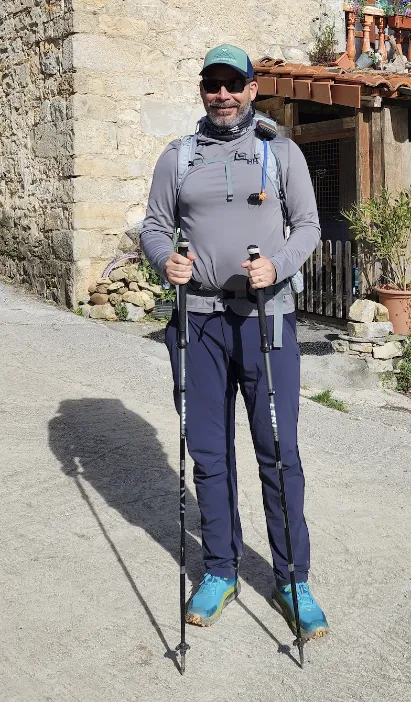 Quechua MH500 Pants
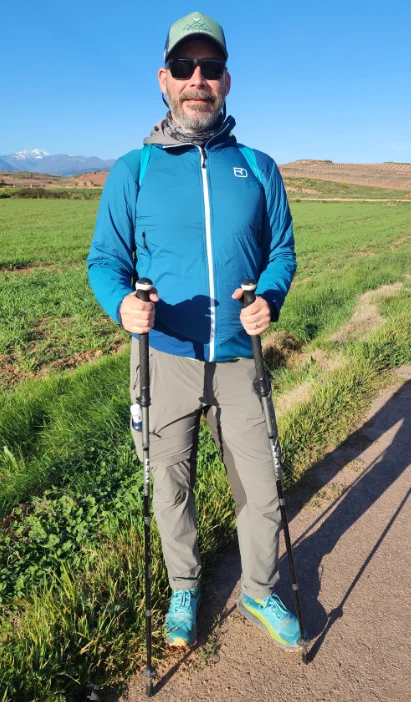 Quechua MH500 Convertible Pants
Comfort and freedom of movement
If I had to pick just one reason to recommend the MH500, it would be the freedom of movement. The main fabric blends 85% polyamide with 15% elastane, in a bi-stretch fabric that stretches in two directions. This, combined with the well-thought-out cut and pre-shaped knees, means the pants move perfectly with climbing, squatting, long strides, and technical trail sections.
When you’re walking all day, what sets apart pants that “move with your body” from pants that catch at the knees, squeeze the thighs, or pull at the waist is huge. In the case of the Quechua MH500 pants, I feel like they just disappear on my body: nothing bothers me, nothing hangs loose, and nothing restricts my movement. For those who do long crossings or pilgrimages, this is an important point.
The cut is described by Decathlon itself as “skinny” or “slightly narrow”. This means they fit closer to the body than traditional trekking pants with a straight cut. For that reason, in many cases, it’s worth considering buying one size up from your usual to keep it comfortable, especially if you have thicker thighs or prefer a less snug fit. But the key is to try them on before you buy.
Breathability and Quick Drying
Another area where the Quechua MH500 pants stand out is in the combination of breathability and quick drying. The lightweight synthetic fabric helps sweat evaporate efficiently, avoiding that constant damp feeling even when your effort level is high.
On the Camino de Santiago, this characteristic made a difference every day. Since I was traveling with only a few pieces of clothing, the routine was simple: I’d walk all day, get to the albergue, take a shower, and put on my spare pants. And, periodically, I’d wash the dirty pair. By the next morning, they were already dry and ready for another day of walking. In some situations with damper weather, they took a bit longer to dry completely, but nothing that got in the way of using them. In some cases, I also used the albergue’s dryer, which is quite common these days on the Camino de Santiago.
Decathlon itself lists a 3/5 breathability rating for the product on its Spain website, which matches my experience in the field: they’re not ultra-thin, all-out summer pants, but they ventilate well enough for hiking in hot weather, especially when you’re moving and there’s airflow.
Pockets, Fit, and Practicality
I’m a fan of pants with functional pockets, and the Quechua MH500 nails it here. The model has four zippered pockets: two traditional hand pockets and two on the thigh area. For hiking, trekking, and other activities, this is extremely practical.
During walks, I usually spread out my phone, documents and cash (if I’m in town), tissues, cereal bars, small snacks, and other items I need within reach. The fact that all the pockets have zip closures gives peace of mind: I can walk on sloping terrain, sit on the ground, or crouch down to adjust something without worrying about an important item rolling down the hill.
Hand pocket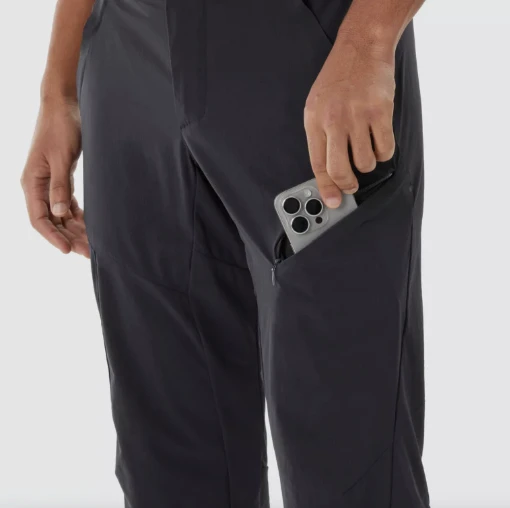 Thigh pocket
Another detail that makes a difference is the integrated belt. The pants come with a lightweight belt, and the waist is semi-elastic, which really helps when adjusting the fit, especially on long trips when body weight can fluctuate. On some newer models, Quechua uses an inner silicone-coated band at the waist to keep the pants from slipping, which improves stability even further. On the version I have, the belt buckle is metal, but I recently saw some models with a plastic buckle.
The adjustable ankles let you taper the pant hem when needed, whether to keep it from rubbing too much against your footwear, to improve ventilation, or even to make it easier to wear with taller socks.
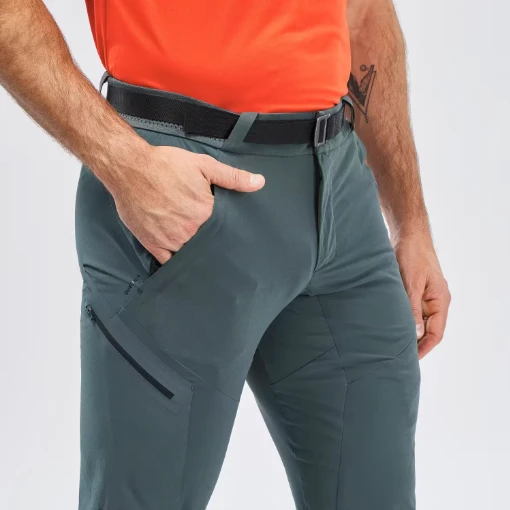 Semi-elastic waist with belt
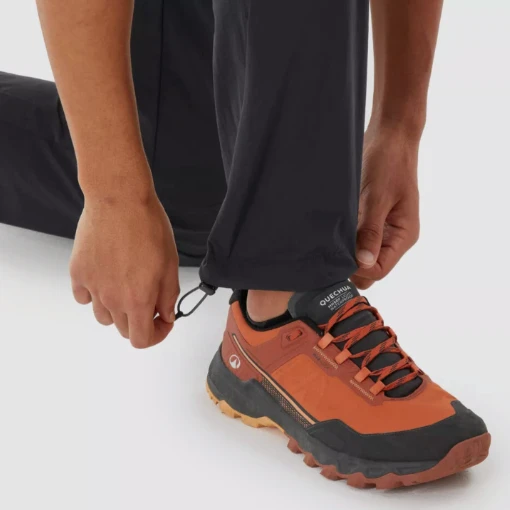 Hem adjustment
Technical Specifications of the Quechua MH500 Pants
The line is updated periodically with new colors and small details, but the technical foundations of the men’s Quechua MH500 trekking pants remain very close to the model I’ve been using since 2019. In short, we have:
Main fabric composition: 85% polyamide, 15% elastane
- Pocket lining: 100% polyester;
- Waist: regular, semi-elastic with silicone, detachable integrated belt;
- Fit: slim (slim/skinny), designed for freedom of movement;
- Pockets: four zippered pockets, two on the front and two on the thighs;
- Length: full-length pants;
- Weather protection: not waterproof and not windproof; the focus is on breathability and comfort;
- Ventilation system: no extra vents; ventilation comes from the fabric itself;
- Colors: vary from country to country. Currently, in Brazil, the pants come in black and blue, but that may change.
From a maintenance standpoint, the pants are simple to care for: the manufacturer recommends machine washing at 86 °F (30 ºC), they dry quickly, and they need practically no ironing. On the road, that’s essential.
Strengths of the Quechua MH500 Pants
Speaking as a user who has had the same model for years, a few points stand out:
The stretch is one of the big selling points. The bi-stretch fabric, combined with the anatomical cut, gives you a freedom of movement that really makes a difference on technical trails.
The breathability and quick drying make the pants very practical for long trips, traverses, and pilgrimages, especially when you need to wash and rewear them back to back.
The four zippered pockets are extremely functional and give you peace of mind when storing important items on the trail, with no risk of losing them.
The durability is impressive. My 2019 pair (black and gray) is still in use, even after trails, trips, and many washes. The fabric hasn’t frayed, the stretch is still good, and the seams have held up very well. The pair I bought in 2024 (blue) already has more than 930 miles (1,500 km) on it and has only lost a bit of its color.
Finally, the value for money is excellent. Although it’s a mid-range product within Decathlon’s own lineup, its performance comes close to that of pricier trekking pants from specialized brands.
Key Considerations and Limitations
No piece of gear is perfect for every situation, and with the Quechua MH500 pants it’s no different.
The first thing to consider is the slimmer fit. If you prefer loose pants or have larger thighs and hips, you might find this model a bit snug, especially if you buy your usual everyday pants size. My recommendation is to try them on without rushing and, if necessary, go up a size. That said, with the stretch of the fabric, I’d say this isn’t a problem. I decided to include this point just to make it clear that the fit is slimmer.
Another thing is that the MH500 is not a waterproof or windproof pair of pants. For heavier rain and wind, you should pair them with waterproof pants, and in cold weather, wear thermal long underwear underneath. But, again, this isn’t a problem. In the layering system, the approach of stacking several layers of clothing, each with its own job (a base layer to manage moisture, a middle layer for insulation, and an outer layer to block wind and rain), these pants are a base layer and do their moisture-management job very efficiently. Once again, I made a point of mentioning this because there is also a waterproof MH 500 model.
Finally, they have no specific reinforcements in high-wear areas, such as the knees and seat. In practice, this wasn’t a problem for me, even with heavy use, but it’s something to consider if you often spend a lot of time sitting on abrasive rock or scrambling over rougher terrain.
Who are the Quechua MH500 pants worth it for?
In my opinion, the Quechua MH500 trekking pants are an excellent choice for:
- those planning the Camino de Santiago or another long pilgrimage and want versatile, breathable, quick-drying pants;
- people who do hiking and trekking and are looking for a comfortable model;
- travelers who like to pack just a few pieces of clothing and value lightweight, durable items that are easy to wash;
- anyone who wants to get into the world of technical mountain pants without immediately investing in much more expensive models from niche brands.
For extreme cold, technical climbing, or snow, I would look for pants with specific reinforcements, greater thermal protection, or a combination with sturdier layering systems. But for the way the vast majority of trekking enthusiasts use them, the MH500 does the job very well.
Conclusion
After many years of testing different trekking pants, I can say with confidence that the Quechua MH500 pants have become my number one reference for comfort, mobility, and practicality. They’re what I wore for almost 500 miles (800 km) on the Camino de Santiago, what I’ve been wearing on plenty of hikes and crossings in the Pyrenees, and what I put in my pack whenever I head out on a longer adventure. Most of the time, when I need lightweight, durable, reliable pants for any outdoor activity, the MH500 ends up being my pick.
They’re not waterproof, and they don’t try to compete with ultra-technical models built for extreme use, but they more than fulfill the role of three-season hiking and trekking pants. They offer excellent freedom of movement, good breathability, quick drying, truly functional pockets, and a value for money that’s hard to beat.
If you’re looking for pants for hiking, trekking, or the Camino de Santiago that can stay with you for many years, the Quechua MH500 is, without a doubt, a model that deserves a serious spot on your list of options.
Where to buy
The Quechua MH500 pants can be found both in Decathlon’s physical stores and on the brand’s official website. Decathlon periodically updates its product links, so if any of the addresses below don’t work, just search for “MH500 Pants” in the search field.
Here are the available versions:
- MH500 Women’s Pants
- MH500 Men’s Pants
- MH500 Convertible Pants/Shorts (Zip-off)
- MH500 Waterproof Pants
Learn more
Below is a list of content related to clothing for outdoor activities: